Thailand Travel Health Guide (2026): Vaccines, Food and Water, Hospitals in Chiang Mai and Travel Insurance
By Connect Booking 10 min read
Which vaccines you need for Thailand, eating and drinking safely, mosquitoes, smoke season, hospitals for tourists in Chiang Mai and why insurance matters.
Most visitors to Thailand stay perfectly healthy. The usual issues are minor: an upset stomach, sunburn, heat, mosquito bites and, in the north from February to April, smoky air. Before you go, see a doctor or travel clinic at least a month before your trip to check your routine vaccines and ask about hepatitis A, hepatitis B and typhoid. Buy travel insurance that covers medical treatment, because hospitals in Thailand expect a guarantee of payment. Then follow a few simple habits on the ground. Here's what to know, based on official health advice checked in November 2026.
Vaccines for Thailand
Thailand doesn't require any vaccines for most visitors. The exception is yellow fever (see below). But health authorities recommend several. The US CDC's advice for travellers to Thailand, reviewed in 2026, is a good summary; your own doctor will tailor it to you.
Recommended for most travellers
- Routine vaccines: make sure you're up to date, including measles-mumps-rubella (MMR), tetanus-diphtheria and flu. Measles is rising worldwide, so check your MMR.
- Hepatitis A: recommended for unvaccinated travellers aged one and over. It spreads through contaminated food and water.
- Hepatitis B: recommended for unvaccinated travellers under 60.
- Typhoid: recommended for most travellers. The vaccine isn't 100% effective, so food and water habits still matter.
Depending on your trip
- Japanese encephalitis: recommended if you'll spend a month or more in Thailand. Consider it for shorter trips with rural stays, hiking, camping or accommodation without air-conditioning or screens. It isn't usually needed for short city trips.
- Rabies: dogs with rabies are sometimes found in Thailand. Pre-travel vaccination is worth discussing if you'll be around animals or far from medical care. Post-exposure vaccines are available in most of the country.
Yellow fever and malaria
- Yellow fever: there's no risk in Thailand, but you'll need a vaccination certificate if you're arriving from, or have transited for more than 12 hours through, a country with yellow fever risk.
- Malaria: cases are rare in Bangkok, Chiang Mai city, Chiang Rai and the popular islands. The risk is mainly in rural forest areas of provinces bordering Myanmar, Cambodia and Malaysia. Ask your doctor whether you need tablets for your route.
Food and water: eating safely
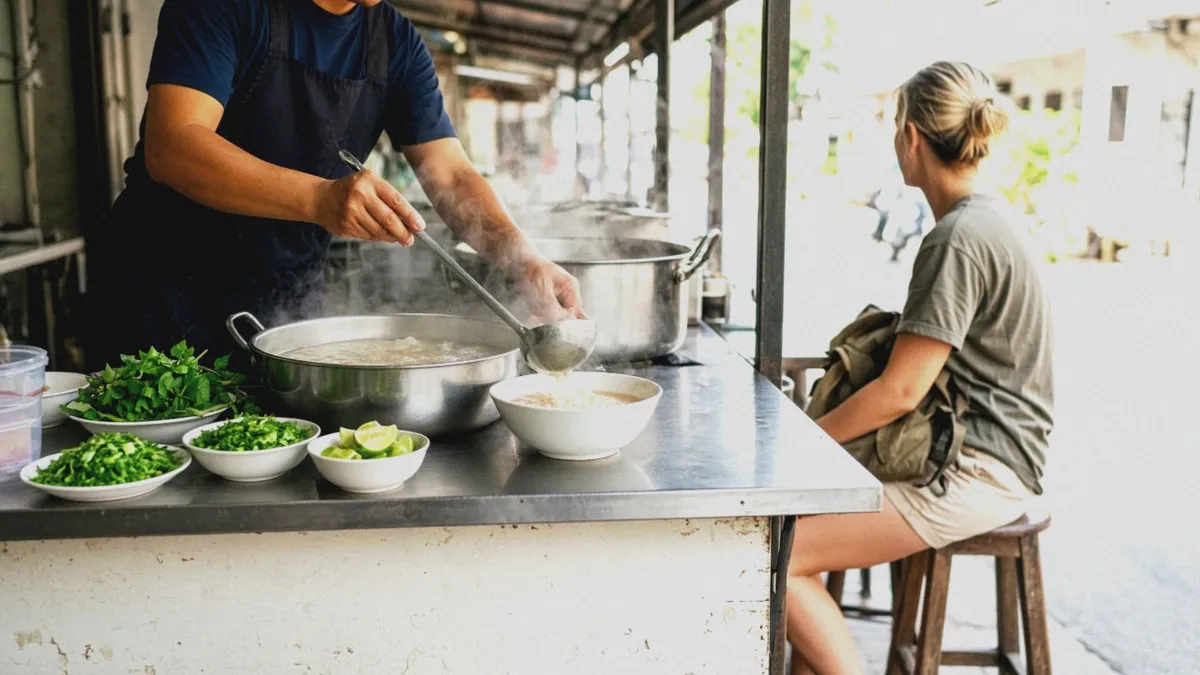
Thai street food is one of the joys of the trip, and most of it is safe. A few habits help:
- Choose hot, freshly cooked food. Busy stalls with high turnover are a good sign.
- Drink sealed bottled water or filtered water. Don't drink tap water. Many hotels and guesthouses provide drinking water or refill stations.
- Ice in restaurants and cafés usually comes from factory-made, tube-shaped ice. If you're unsure, skip it.
- Be careful with raw food, such as salads at very basic stalls, raw seafood and unpasteurised dairy.
- Wash your hands or use sanitiser before eating.
- Food allergies: fish sauce, shrimp paste and peanuts are common ingredients. Carry a card in Thai that explains your allergy.
If you do get an upset stomach, rest, drink plenty of water with oral rehydration salts (sold in every pharmacy), and see a doctor if you have a high fever, blood in your stool or symptoms that last more than a couple of days.
Mosquitoes: dengue and other bites
Dengue, Zika and chikungunya are spread by mosquitoes in Thailand, and there's no dengue vaccine recommended for most visitors. The CDC currently notes an elevated chikungunya risk in Thailand. Protect yourself:
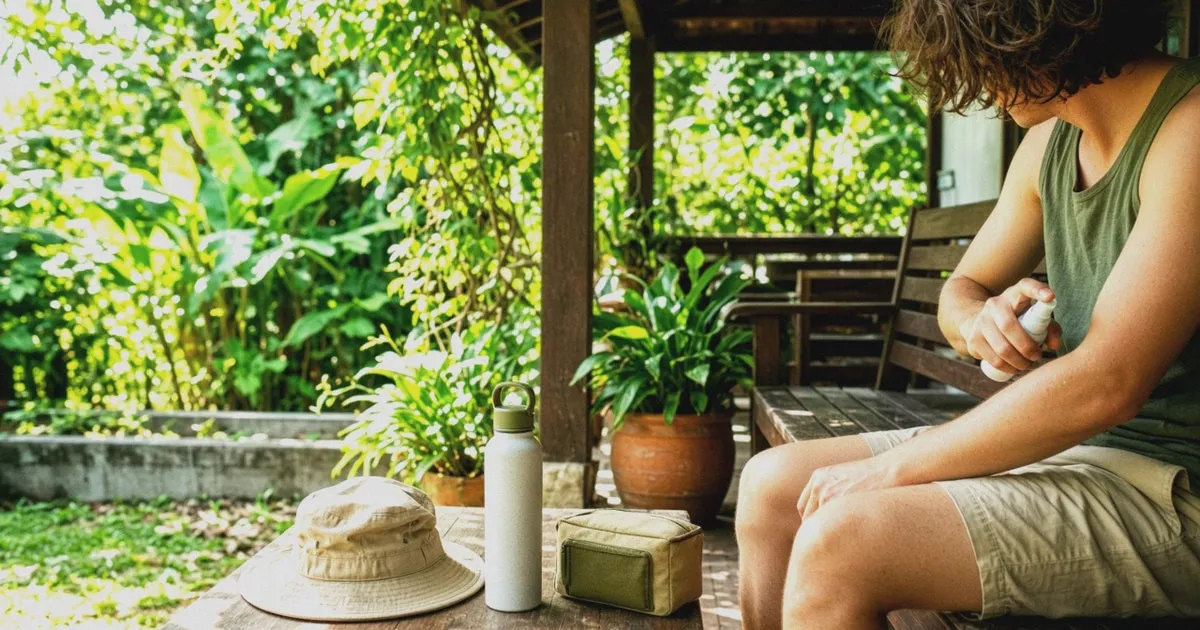
- Use repellent containing DEET or picaridin, especially at dawn and dusk.
- Wear long sleeves and trousers in the evening and on jungle walks.
- Sleep in air-conditioned rooms or rooms with screens.
See a doctor if you develop a sudden high fever, severe headache, joint pain or a rash during or after your trip, and say you've been to Thailand.
Air quality: Chiang Mai's smoke season
From roughly February to April, agricultural and forest burning fills northern Thailand's air with haze. Haze is common in Chiang Mai in February and March. In April 2026, the Ministry of Public Health reported PM2.5 levels in Chiang Mai as high as 314.3 µg/m³ and advised both residents and foreign visitors to limit time outdoors and wear N95 masks.
If you have asthma or heart or lung conditions, or you're travelling with small children, think about visiting at another time of year. If you go, check the daily air quality, keep plans flexible and pack N95 masks.
Heat and sun
April is Chiang Mai's hottest month, with average highs around 37°C. Bangkok and the islands are hot and humid all year. Drink water regularly, add rehydration salts on long days out, use high-SPF sunscreen and plan outdoor sightseeing for mornings and late afternoons.
Water, mud and animals
- After heavy rain or floods, avoid wading in floodwater or muddy water. The CDC lists leptospirosis and melioidosis as risks from contaminated water and soil in Thailand. Cover cuts and wounds.
- Don't touch stray dogs, cats or monkeys. If you're bitten or scratched, wash the wound with soap and water for several minutes and get medical help the same day.
- Choose ethical animal experiences. At reputable sanctuaries you observe, feed and walk with elephants under supervision, with no riding.
Hospitals and medical care in Chiang Mai

Chiang Mai has good healthcare. Private hospitals are of a high standard and used to treating foreigners, but they can be expensive, and all hospitals require a guarantee of payment before treatment. That's why insurance matters.
Hospitals visitors commonly use:
- Bangkok Hospital Chiang Mai: a private hospital with an International Medical Services department, interpreters in several languages and phone support in many more. It can coordinate with insurers and embassies.
- Chiangmai Ram Hospital: a long-established private hospital near the Old City, with international patient services and interpreters for languages including English, Chinese, Japanese, Korean, German and French.
- Maharaj Nakorn Chiang Mai Hospital: Chiang Mai University's teaching hospital and the north's main referral centre for complex cases. Its private Sriphat Medical Center on the same campus has a foreign patient centre.
For minor problems, pharmacies are everywhere and pharmacists can advise on common complaints. UK advice notes that hospitals and pharmacies usually accept foreign prescriptions, but medicines bought on the street may not be genuine.
Emergency numbers
- 1669: emergency medical services (ambulance)
- 191: police
- 1155: Tourist Police (24 hours, several languages)
Call your insurer's emergency line as soon as possible if you're admitted to hospital.
Travel insurance for Thailand
As of November 2026, travel insurance is not an entry requirement for regular tourists in Thailand. The government has discussed a 450-baht foreign-tourist fee that would partly fund insurance cover for visitors, to reduce unpaid hospital bills, but the fee is not in force yet.
Even so, you should treat insurance as essential:
- Check it covers medical treatment, hospital stays and medical evacuation.
- If you'll ride a scooter, check the policy covers it. Many insurers won't pay if you don't hold the right licence or weren't wearing a helmet.
- Check cover for adventure activities you've booked, such as trekking, ziplining or rafting.
- Keep the policy number and emergency phone number on your phone and on paper.
Bringing your medicines
You can bring up to a 30-day supply of personal medicines. Some sleeping, anxiety, ADHD and strong pain medicines need a prescription or an FDA permit. See our packing guide for the details, and check the Thai FDA's rules before you fly.
Healthy days out from Chiang Mai
Fresh air, forest walks and time with rescued elephants are a great antidote to busy city days. TK Ethical Elephant Sanctuary's half-day elephant care and herbal wellness experience adds a herbal wellness element to an elephant visit with no riding. The full-day ethical elephant, nature and wellness adventure makes it a full day. For hikers, the guided 1-day trek in Doi Inthanon National Park is best in the cool, clear months. Bring repellent, water and sun protection on any outdoor tour.
Frequently asked questions
Do I need vaccines to travel to Thailand?
No vaccines are required for most visitors, except a yellow fever certificate if you arrive from a risk country. Health authorities recommend routine vaccines plus hepatitis A, hepatitis B and typhoid for most travellers.
Is the tap water safe to drink in Thailand?
Don't drink tap water. Drink sealed bottled or filtered water. Ice in restaurants is usually factory-made, but skip it if you're unsure.
Is there malaria in Chiang Mai?
Cases are rare in Chiang Mai city. The risk is mainly in rural forest areas along the borders with Myanmar, Cambodia and Malaysia. Ask a doctor about your exact route.
What is the best hospital in Chiang Mai for tourists?
Bangkok Hospital Chiang Mai and Chiangmai Ram Hospital both have international patient services and interpreters. Maharaj Nakorn Chiang Mai is the university referral hospital for complex care.
Do I need travel insurance for Thailand?
It isn't required for entry as of November 2026, but it's strongly recommended. Hospitals require a guarantee of payment, and private care can be expensive.
What is the emergency number in Thailand?
Dial 1669 for an ambulance, 191 for the police, and 1155 for the Tourist Police, who speak several languages.
Start planning
Sort your vaccines and insurance, pack repellent and sunscreen, and choose hot, fresh food, and you'll spend your trip enjoying Thailand rather than worrying about it. When you're ready, browse Chiang Mai tours on Connect Booking.
This is general travel information, not medical advice. Speak to a doctor or travel clinic about your own needs. Facts checked November 2026.
Sources
- US CDC — Travelers' Health: Thailand (vaccines, yellow fever, malaria areas, rabies, chikungunya, dengue, leptospirosis, melioidosis, road safety) — https://wwwnc.cdc.gov/travel/destinations/traveler/none/thailand — accessed 16 November 2026
- UK FCDO — Thailand health (1669; guarantee of payment; private hospitals; prescriptions and medicines; visit a clinic 8 weeks before) — https://www.gov.uk/foreign-travel-advice/thailand/health — accessed 16 November 2026
- NOAA National Centers for Environmental Information — WMO climate normals 1991–2020, Chiang Mai station 48327, from Thai Meteorological Department data (monthly temperatures) — https://www.nodc.noaa.gov/archive/arc0216/0253808/1.1/data/0-data/Region-2-WMO-Normals-9120/Thailand/CSV/ChiangMai_48327.csv — accessed 17 November 2026
- PRD, citing the Ministry of Public Health — severe dust pollution in northern provinces (PM2.5 314.3 µg/m³ in Chiang Mai; N95 advice) — https://thailand.prd.go.th/en/content/category/detail/id/43/cid/2078/iid/492150 — published 7 April 2026; accessed 16 November 2026
- Bangkok Hospital Chiang Mai — International Medical Services Department — https://www.bangkokhospital.com/en/chiangmai/page/international-medical-services-bcm — accessed 16 November 2026
- Chiangmai Ram Hospital — international patient services and interpreters — https://chiangmairam.com/news_detail/835 — accessed 16 November 2026
- Chiang Mai Brief — Which hospital in Chiang Mai is best for foreigners? (Maharaj Nakorn as university referral hospital; Sriphat) — https://chiangmaibrief.com/guide/best-international-hospitals-chiang-mai/ — accessed 16 November 2026
- Tourist Police Bureau — Tourist Police 1155 — https://www.touristpolice.go.th/en/post/tpbnews2026102203 — published 22 October 2026; accessed 16 November 2026
- Ministry of Tourism and Sports — public consultation on a 450-baht foreign-tourist fee and visitor insurance (to reduce unpaid treatment costs; not yet in force) — https://www.mots.go.th/news/1003943 — published 6 October 2026; accessed 17 November 2026
- Thailand News — 450-baht tourist fee unlikely before mid-2027 — https://thailandnews.org/business/thailand-s-450-baht-tourist-fee-unlikely-before-mid-2027 — accessed 16 November 2026
- UK FCDO — Thailand safety and security (scooter licences, helmets and insurance) — https://www.gov.uk/foreign-travel-advice/thailand/safety-and-security — accessed 16 November 2026
- Thai FDA — Passenger belongings related to health products (medicines 30-day rule) — https://en.fda.moph.go.th/guideline-of-importation-for-personal-use/bringing-of-health-products-into-the-kingdom-of-thailand-01 — accessed 16 November 2026
Tours for this trip
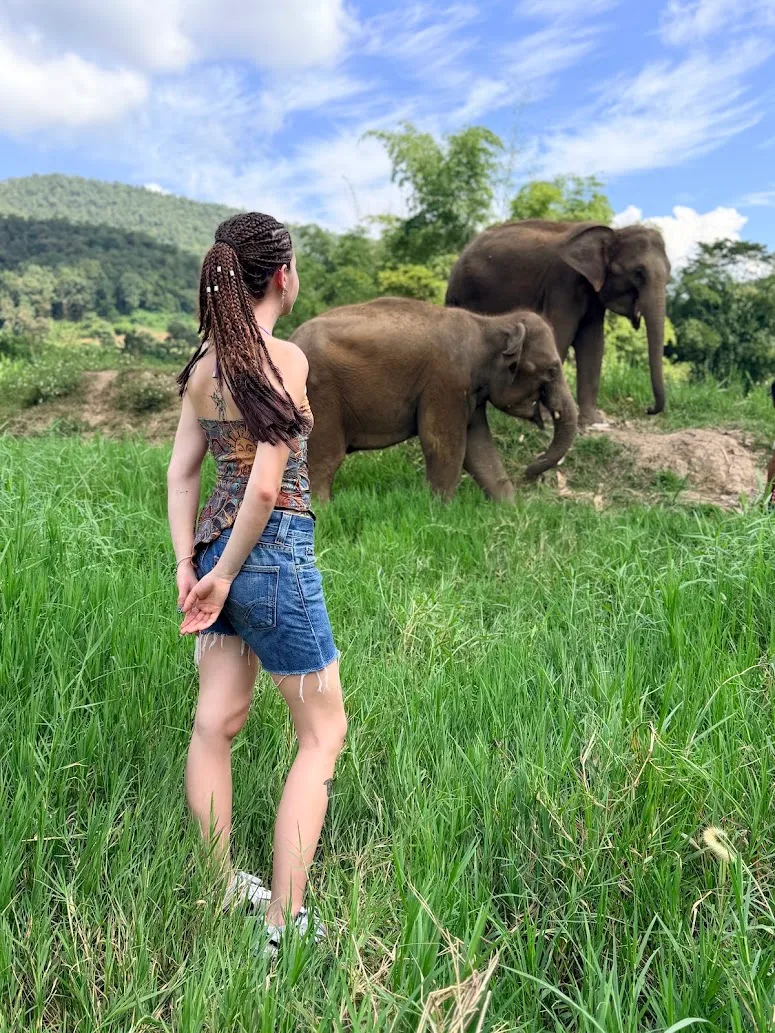
TK Ethical Elephant Sanctuary
Half day Ethical Elephant Care & Herbal Wellness (Morning & Afternoon)
From฿1,500/ person
Book now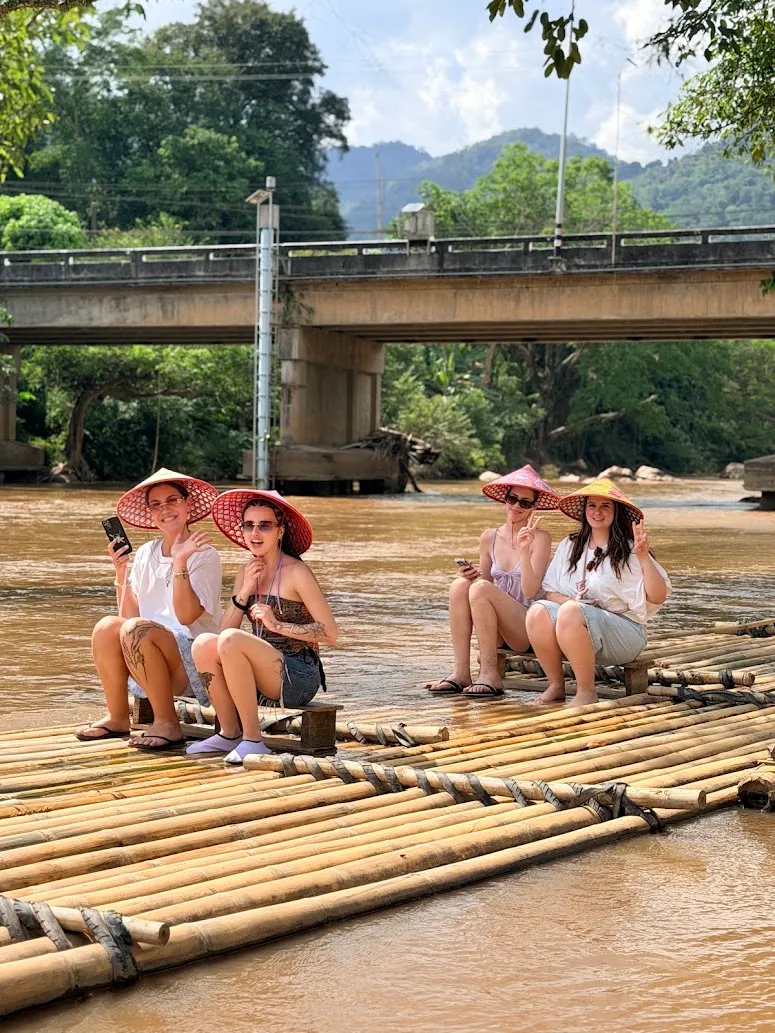
TK Ethical Elephant Sanctuary
Full-Day Ethical Elephant & Nature Adventure and Wellness Experiences
From฿2,000/ person
Book now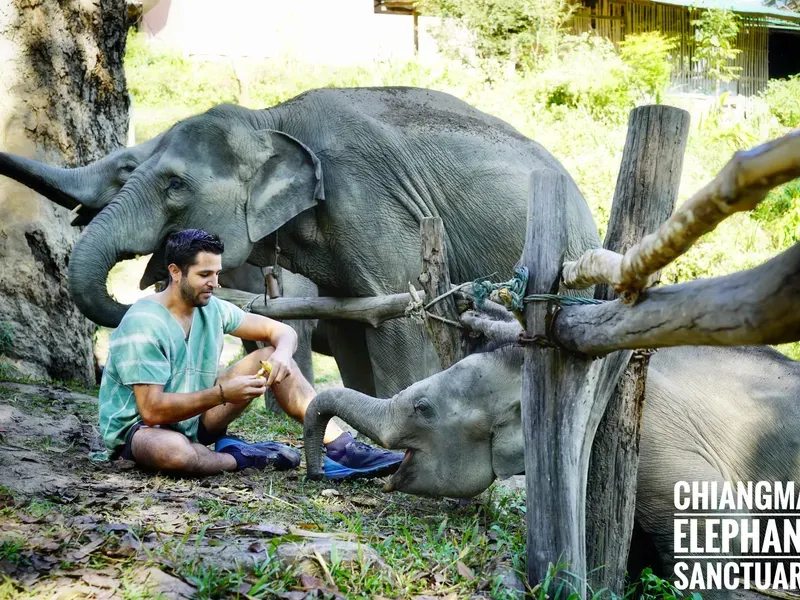
Chiang Mai Elephant Sanctuary
1 day trekking
From฿1,800/ person
Book now